The Bell Trail: Hike to the Crack at Wet Beaver Creek


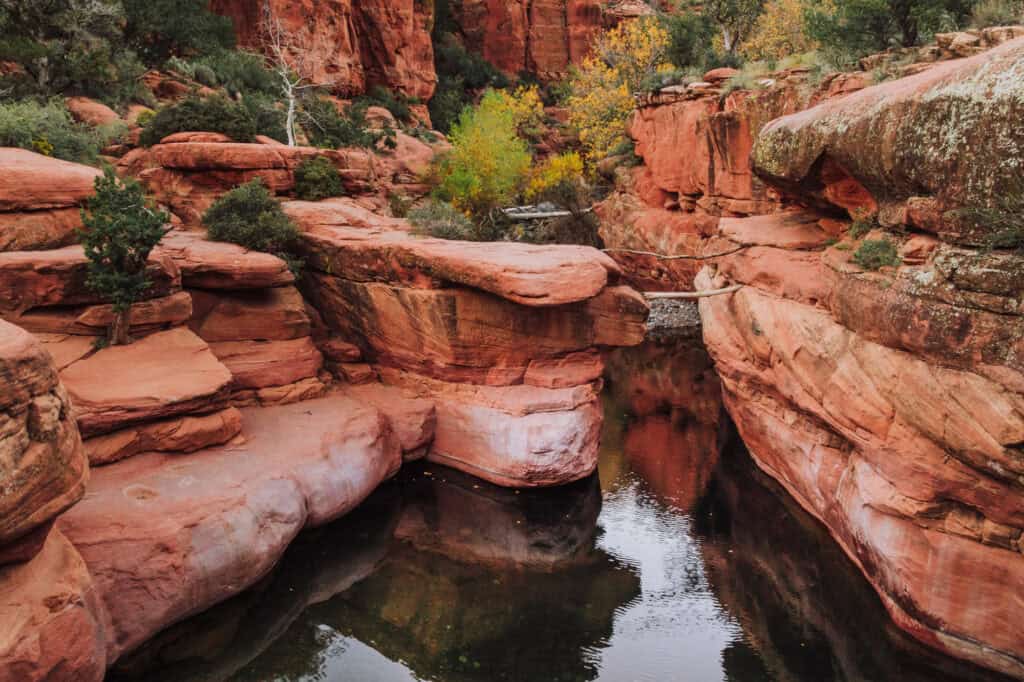
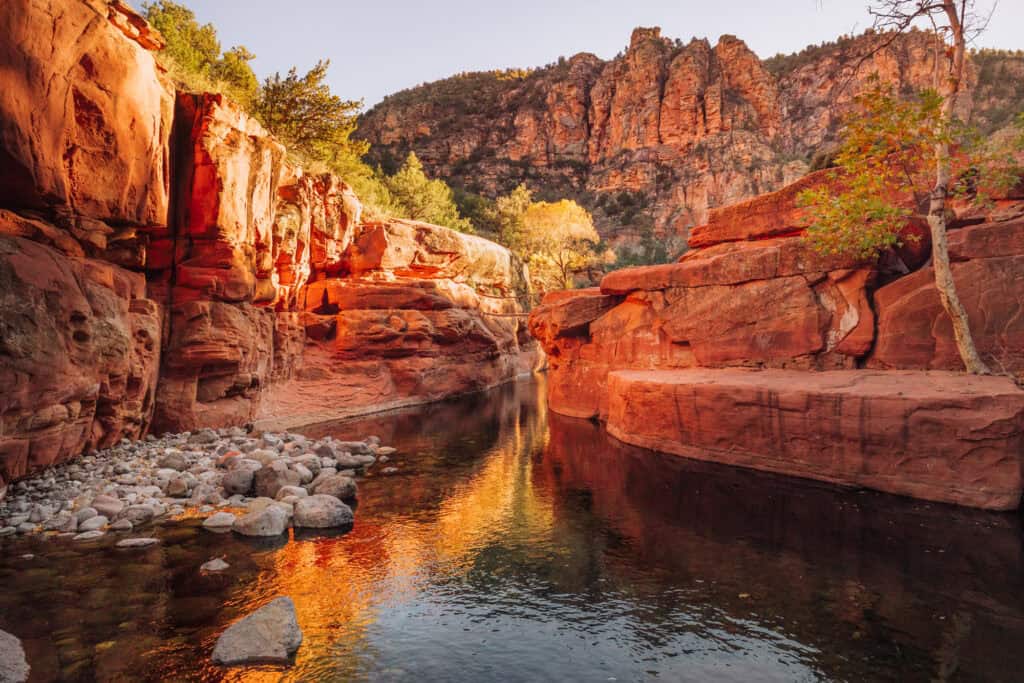
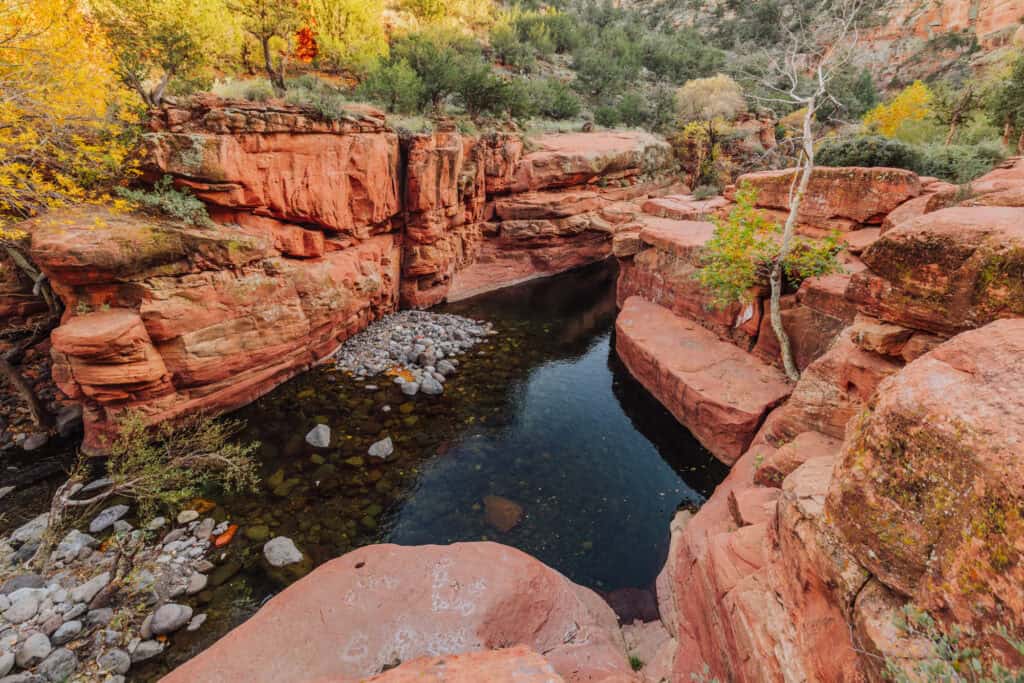
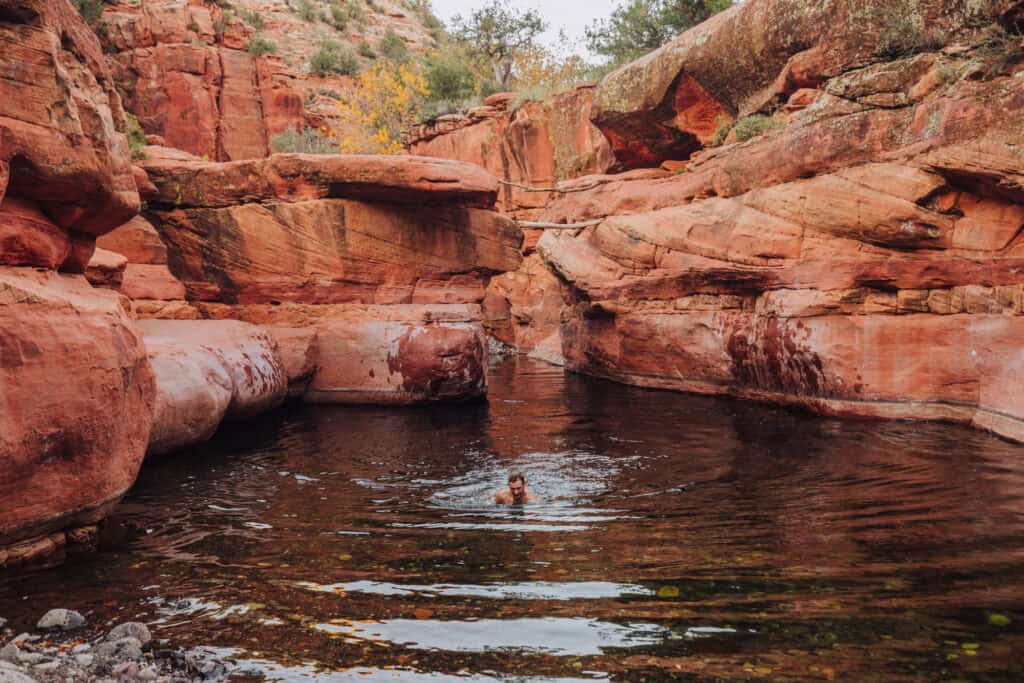
The Bell Trail leads you to one of Arizona’s most famous swimming holes, known as “The Crack” at Wet Beaver Creek.
Wet Beaver Creek is spring-fed, and flows through the Coconino National Forest. It creates a lush, green canyon through the surrounding desert landscape.
The parking lot and “The Crack” swimming area are crowded in the summer, but no permits or reservations are required.
While you’ll be hiking to “red rocks,” it’s 20 miles away from downtown Sedona, making it a good day trip from Phoenix, or Flagstaff.
Basic Info on the Bell Trail:
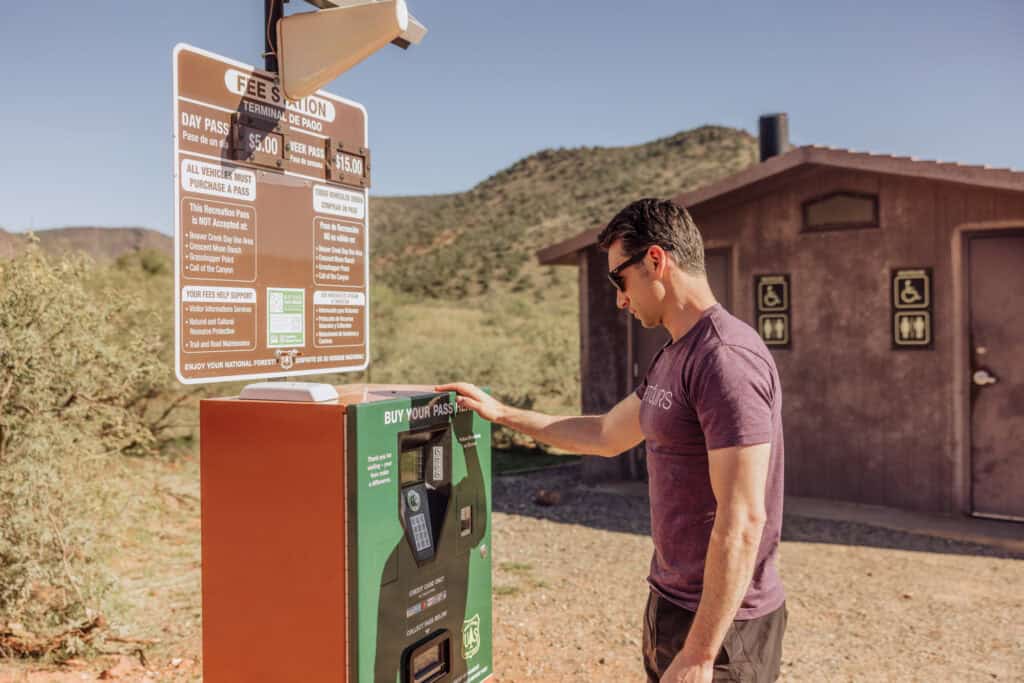
- You’ll pay a $5 fee at a kiosk in the parking lot.
- The hike is 4 miles each way.
- The trail includes flat sections with no shade, along with some rocky inclines.
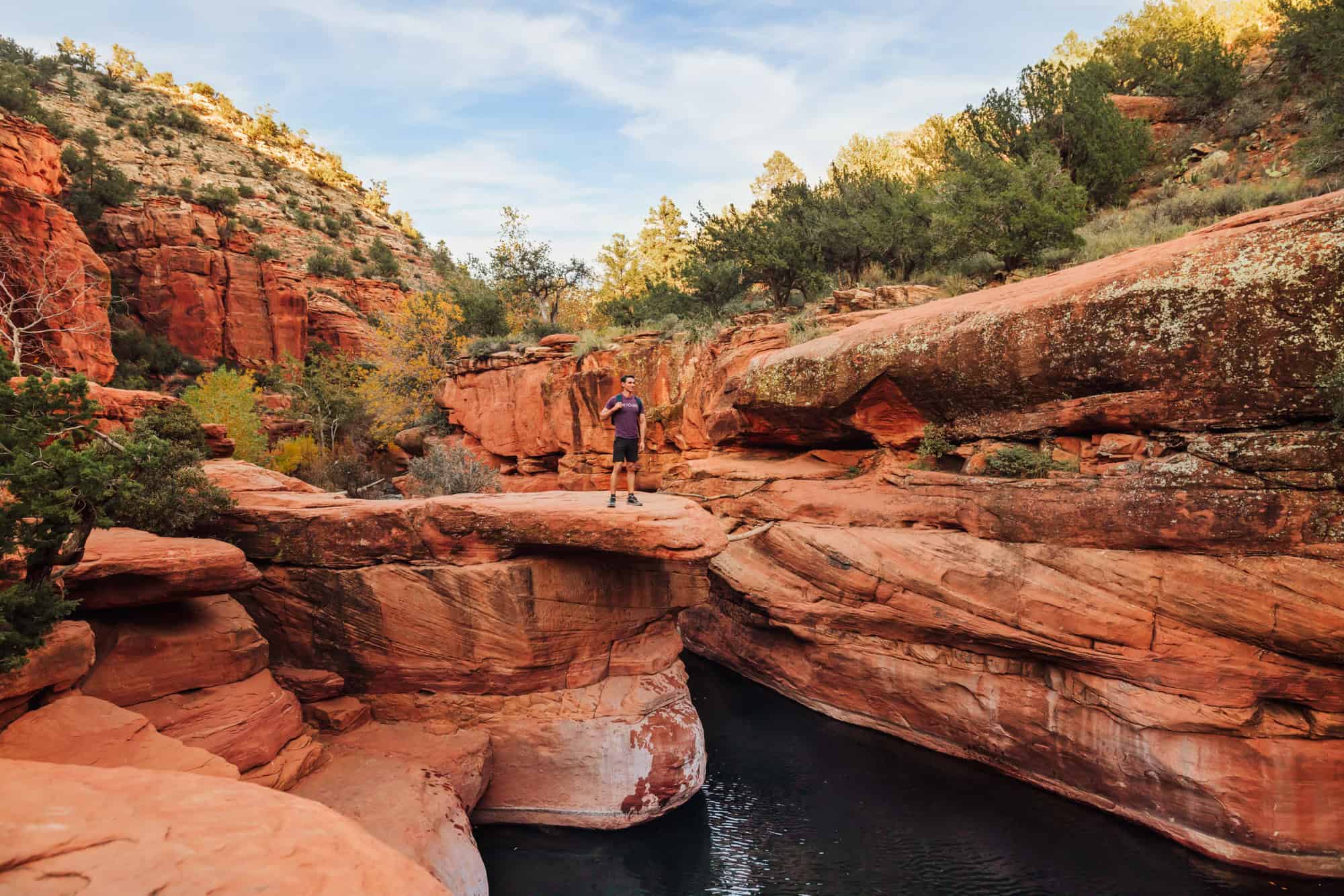
- At “The Crack” you’ll find a deep swimming hole and rocks for cliff jumping.
Getting to the Bell Trailhead
On the I-17, between Phoenix and Flagstaff, you’ll take the exit for Highway 179. At the end of the ramp, instead of heading west toward Sedona, you’ll go east to the Beaver Creek area.
Driving Distances:
- From Phoenix: 100 miles
- From Flagstaff: 45 miles
- From Sedona: 20 miles
- From Tucson: 215 miles
Bell Trailhead Parking
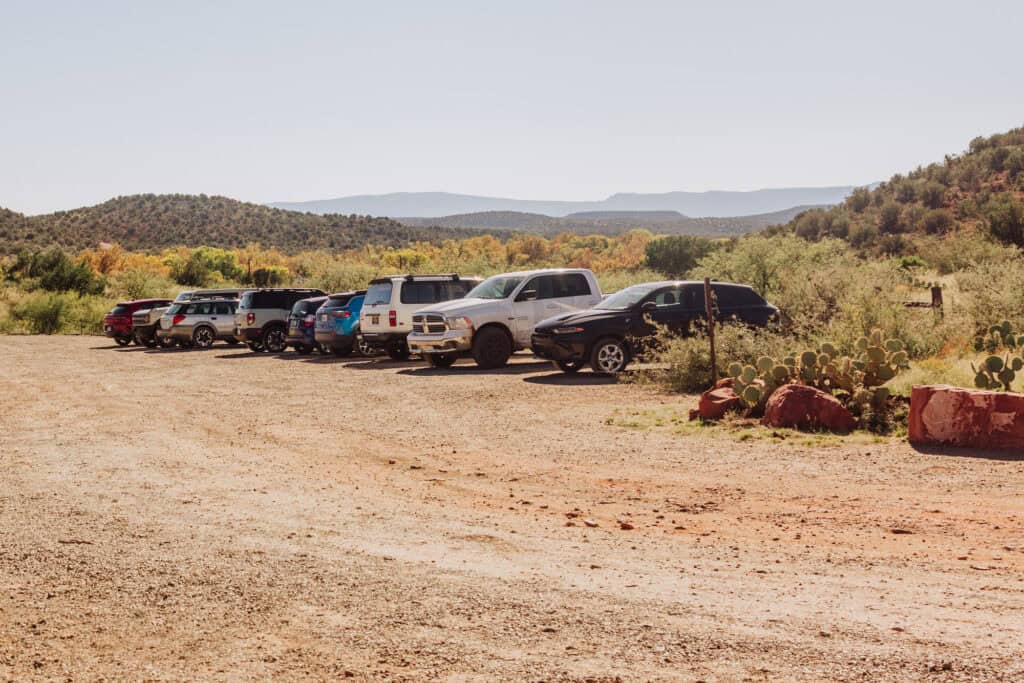
The trailhead has a large parking lot, with room for around 50 cars. There’s also an overflow lot nearby (follow the signs). Both fill up during the hot summer months.
You’ll find vaulted toilets in the lot, but no other services.
There’s an easy-to-use self-pay kiosk at the trailhead to pay the $5 fee to park here.
Hiking the Bell Trail to The Crack at Wet Beaver Creek
The trail to “The Crack” is broken up into different sections, spread out over about 4 miles. You can accomplish it in about 90 minutes, depending on how much time you spend on breaks.
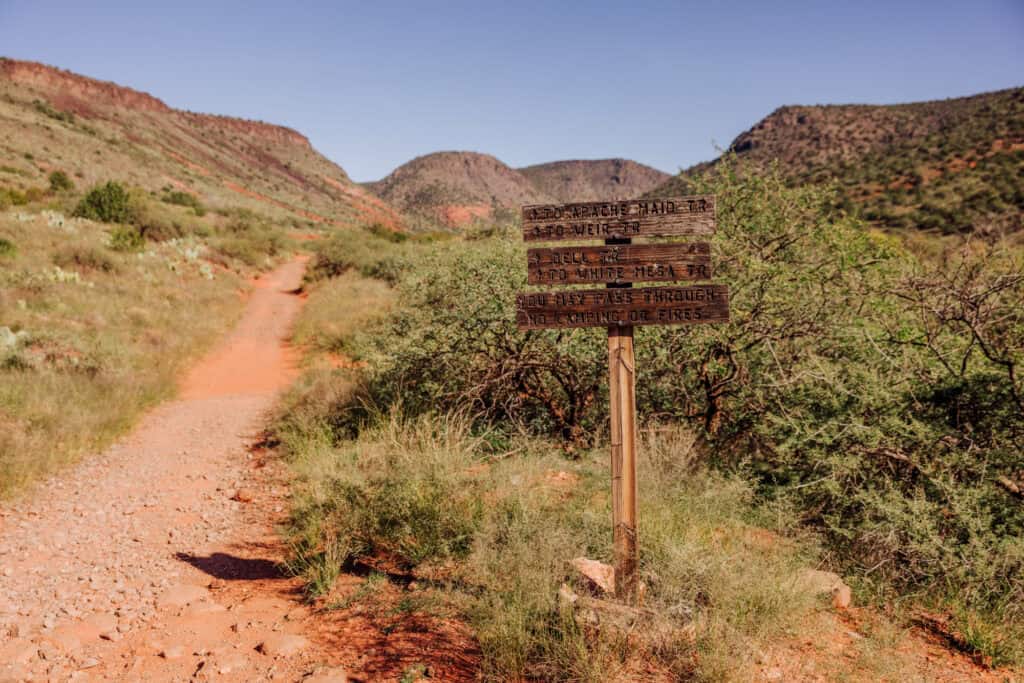
Hiking the Bell Trail: Mile 1
The first mile is flat, over a dirt and rock trail. It’s important to note: there’s no tree cover or shade. This section gets very hot during the summer. Make sure to save plenty of water for your hike *out.*
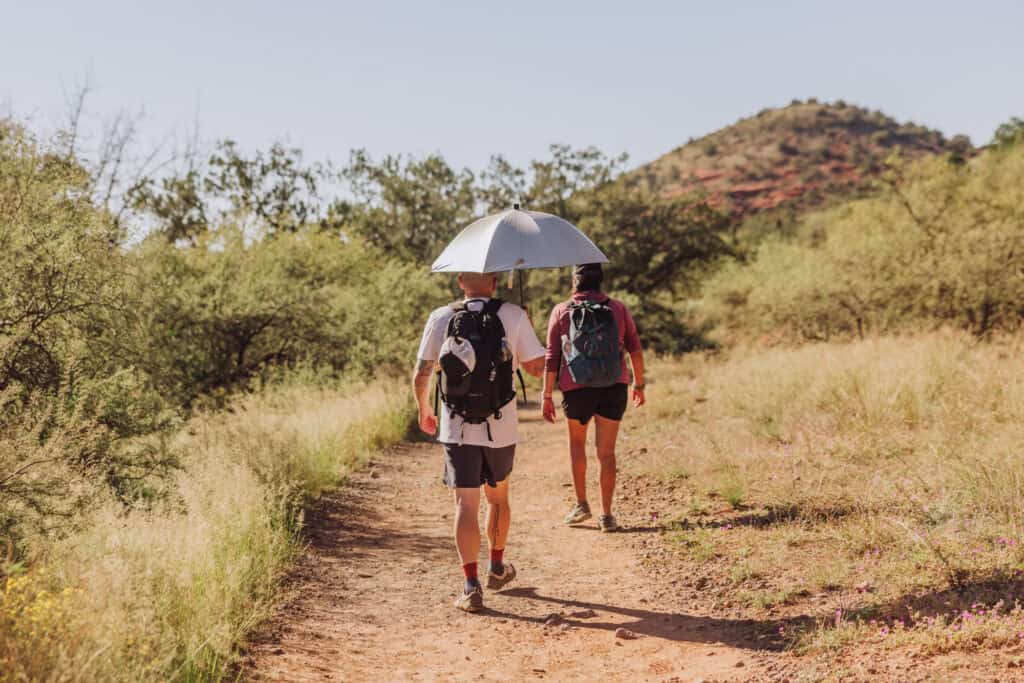
Hiking the Bell Trail: Mile 2
The second mile of the hike is similar to the first, with the addition of minimal shade. You’ll have at least a few chances to take a break in the shade on a summer day.
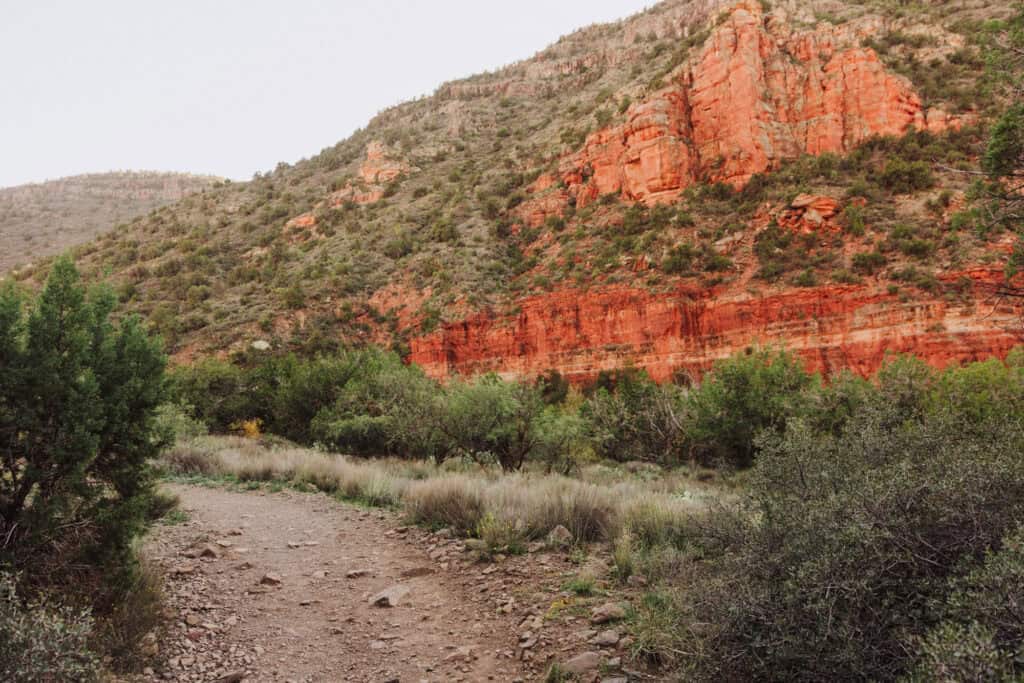
Hiking the Bell Trail: Mile 3
On the third mile, about 2.5 miles into the hike, you’ll reach a fork in the trail.
Go left to follow the Bell Trail. This is where the trail starts to incline.
Hiking the Bell Trail: Mile 4
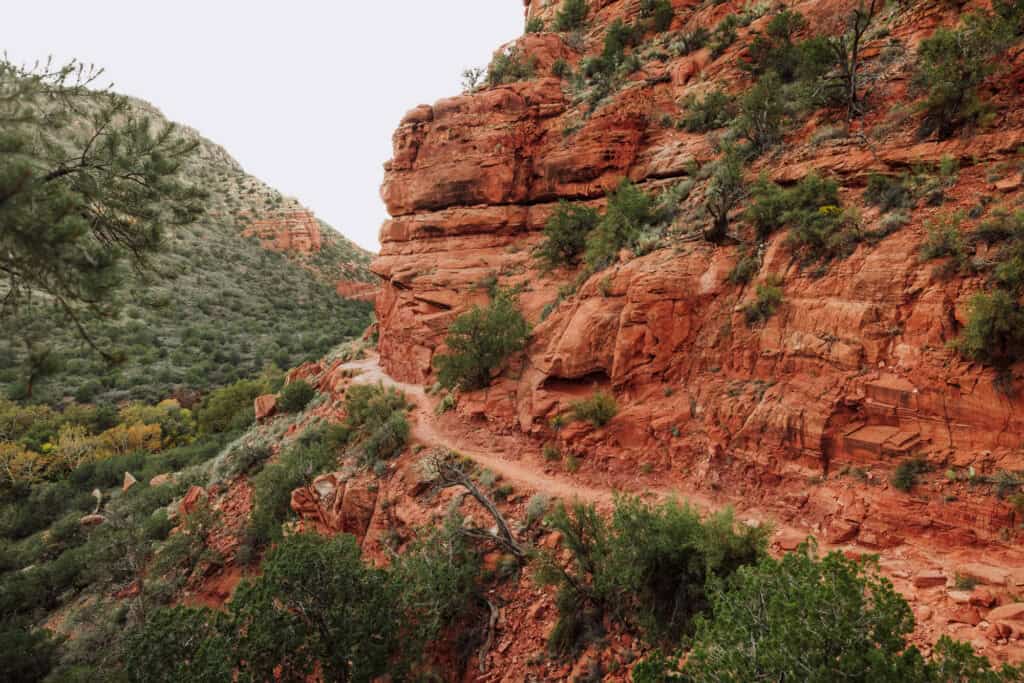
For much of the fourth mile of your hike, you’ll be in the beautiful red rocks. The trail leads you up and down rocky paths, which are at least partially shaded.
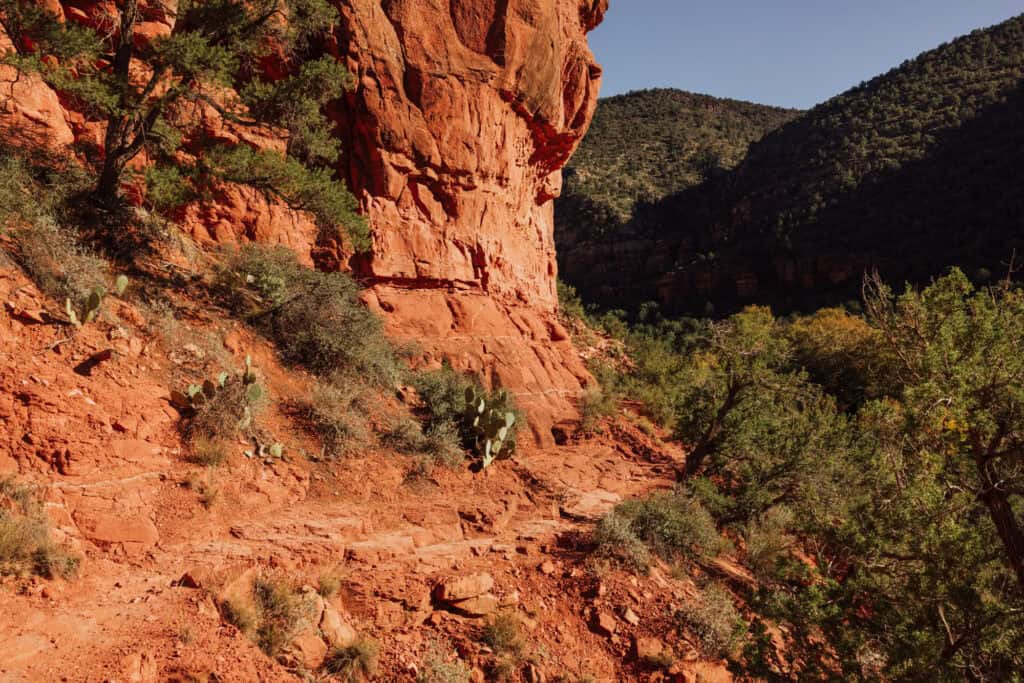
The final half mile of the hike is a decline down to Wet Beaver Creek.
The Crack at Wet Beaver Creek
The flat rock surfaces and surrounding forest at “The Crack” fill with people in the summer months.
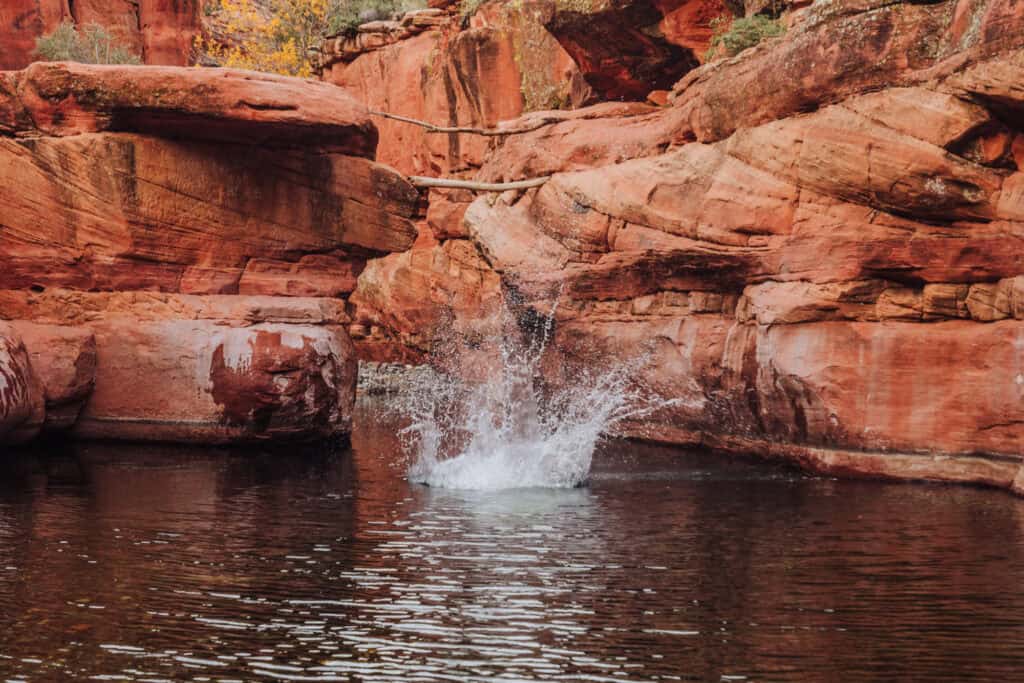
By fall, it’s far less crowded and people still come to jump off the cliffs.
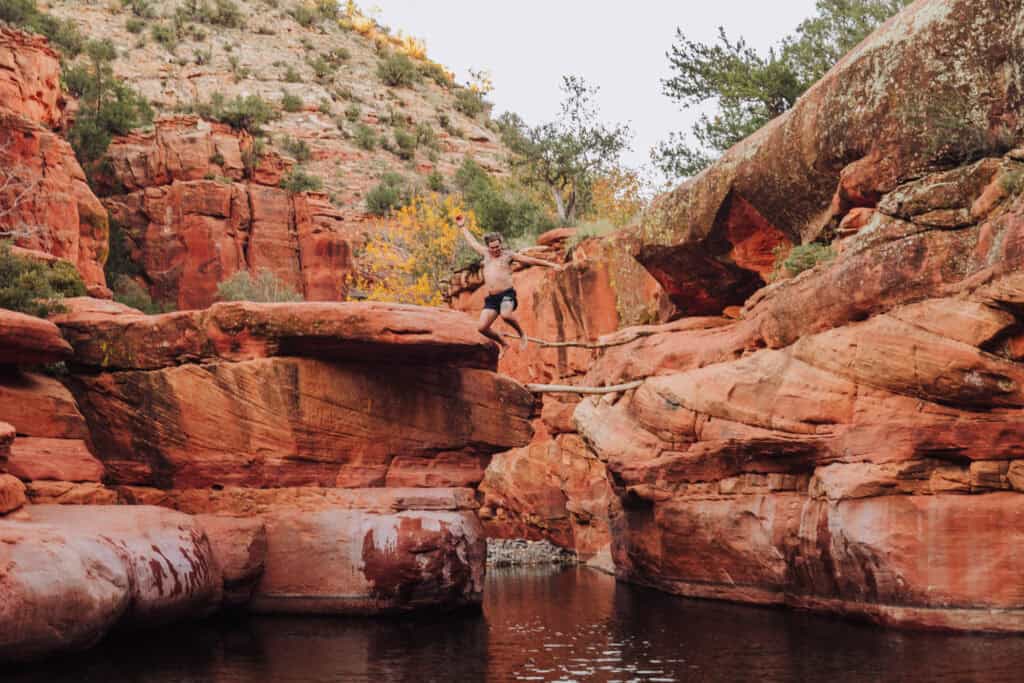
The water is cool and clear, unless you go right after a summer monsoon storm.
The water levels change through the seasons, so make sure the swimming hole is deep enough before diving in.
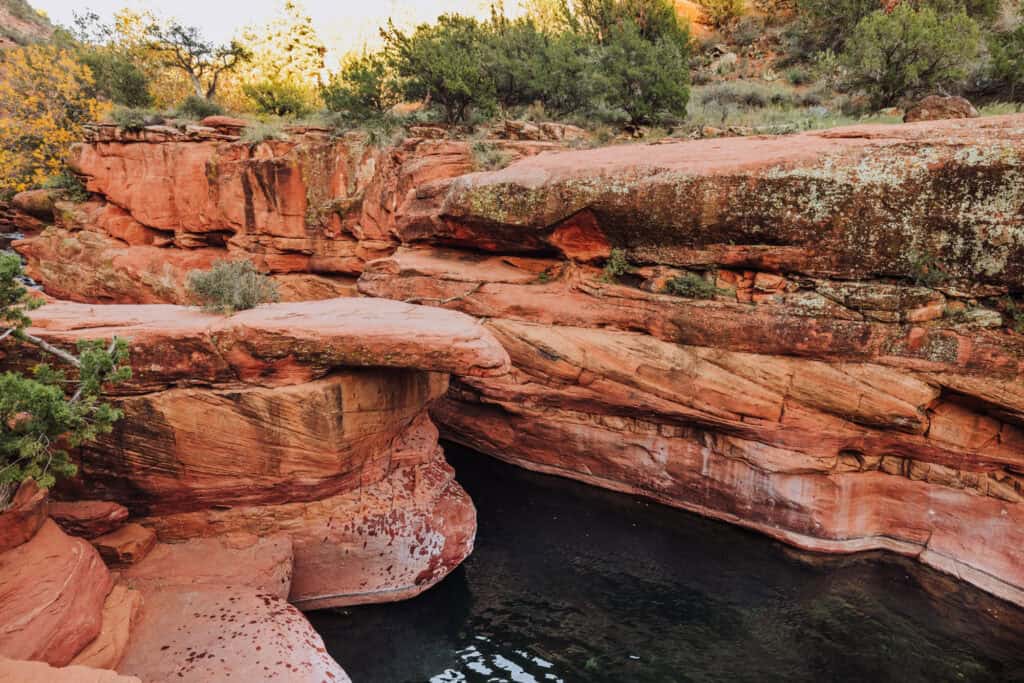
There are no rangers or lifeguards on duty, so swim and cliff jump at your own risk!
Wet Beaver Creek: Rules and Warnings
A lot of people bring dogs on the Bell Trail hike. They’re supposed to be leashed on the trail.
A few things all hikers should keep in mind:
- Bring more water than you think you’ll need! On my last visit in October, it was cool out and I didn’t bring nearly enough water to last on the hike out.
- There’s no cell service in most of the canyon.
- Flash flooding is possible, especially during the summer monsoon season (July through September).
Camping at Wet Beaver Creek
While there’s no camping at The Crack or along the Bell Trail, I’ve seen tents setup there.
Nearby, you can camp at:
- The Beaver Creek Campground
- Clear Creek Campground
- Outside the riparian zones in the Coconino National Forest
Wrap: Why I Love the Bell Trail
In 1932, Charles Bell constructed this trail through the rugged canyon created by Wet Beaver Creek.
It was originally used to move cattle up and down the Mogollon Rim.
While the state is known for its desert landscape, Arizona is also home to great swimming holes, like Fossil Springs, Havasupai Falls, Waterwheel Falls, and Wet Beaver Creek. Sedona alone has a number of beautiful spots to cool off in along Oak Creek.
While the Bell Trail (and “The Crack”) can get rather crowded, it’s definitely worth a visit. I think the sweet spot for a visit is midweek in September, when it’s still hot enough to swim, but less crowded by tourists.
Things to Do Nearby
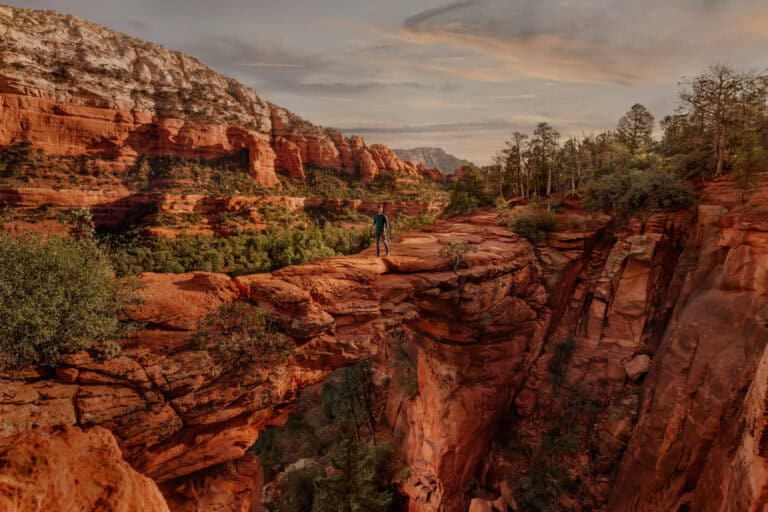
Sedona is close to the Bell Trail, and there are endless trails to explore in the area. While the city is more crowded than ever, you can still enjoy the iconic trails like Devil’s Bridge. North of Sedona, the “Jenga Rock” or “Edge of the World” is a favorite. Also nearby, Fossil Creek is another swimming hole option, but you’ll need a permit for the lots there.